
"Should we add AI?" is usually the wrong first question. A better one is: which task do we repeat every day, and what would it look like if it took half the time? The answer decides whether you need a chatbot, an AI agent, or something simpler.
The short answer
- A chatbot holds a conversation. It answers questions, ideally from your own material, and hands the person to a human when it gets stuck.
- An AI agent can also do things: look up an order, fill in a form, draft a reply, or move a request to the next step, using tools you give it permission to use.
- Many problems need neither. A clearer web page, a better form or a simple automation can fix them for less.
When a chatbot is enough
A chatbot works well when people keep asking the same questions and the answers already exist somewhere: opening hours, service areas, prices, policies, how to book. The important part is not the chat window. It is the source material. If the answers live in five documents that contradict each other, the bot will repeat the contradictions.
Good signs a chatbot fits:
- You can list the 20 questions you answer most.
- The answers are written down, or could be in an afternoon.
- Nothing bad happens if a visitor is told "let me connect you with a person".
When you need an agent
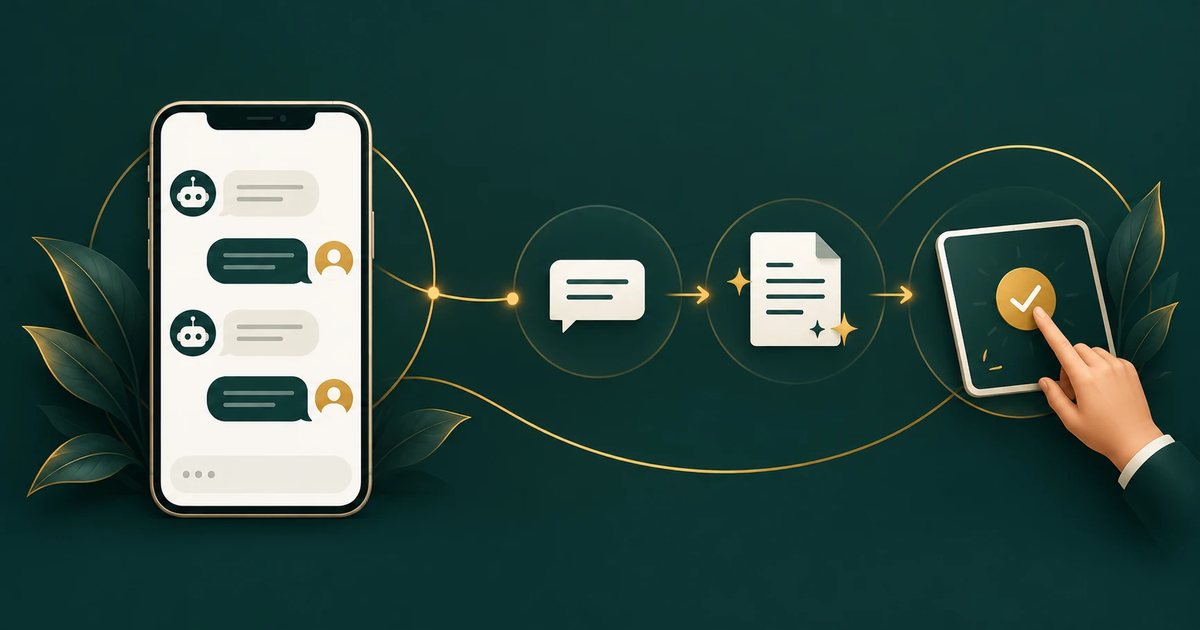
An agent makes sense when the work involves several steps across your tools. For example: an inquiry arrives, the agent reads it, checks your price list and calendar, and drafts a quote or a reply. The difference is that an agent acts, so the design has to decide what it may do on its own and what needs approval.
That is why we build agents with a person in the loop for anything important. The agent prepares, a person approves, and only then does the message go out or the record change. You get the speed without handing over the keys.
Questions to ask before you start
- What exact task are we improving? "Customer service" is too broad. "Answering delivery questions by email" is a task.
- Where does the information live? Documents, a spreadsheet, a CRM, someone's head.
- What may it do without asking? Read only? Draft? Send?
- How will we know it works? Collect real examples before you build, and test against them.
What it costs to run
Besides building it, AI tools have usage costs that grow with the number of conversations or tasks. Plan for them from the start, and keep the first version small: one task, one channel, measured for a month.
A practical first step
Write down one week of the questions or requests you handle, with the answer you gave. That list tells you whether you need a chatbot, an agent, or a better FAQ page, and it becomes the test set for whatever you build.
If you want help reading that list, see how we approach AI agent development or tell us about your workflow.